 Reviews



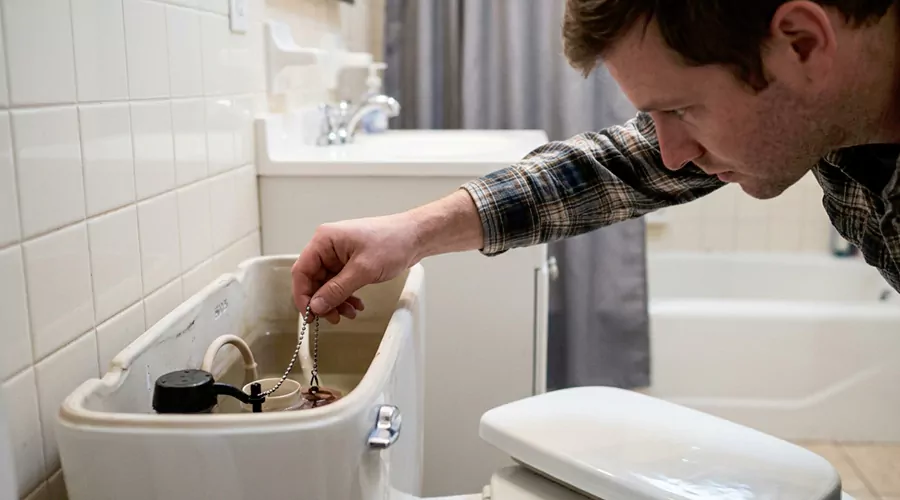
A broken toilet chain stops the flush handle from lifting the flapper, and many basic no-flush repairs cost only $0 to $20 in parts in 2026. Reattaching an intact chain takes minutes. A rusted or snapped chain should be replaced rather than temporarily tied together. Toilet repair can address broken chains, worn flappers, faulty handles, and other common flushing problems.
When the toilet chain broke, the handle often moves with little resistance.
The tank still contains water.
The missing mechanical connection prevents that water from being released into the bowl.
What Does the Toilet Chain Do?
The toilet chain connects the flush lever inside the tank to the flapper at the bottom. Pressing the handle moves the lever upward. The chain then lifts the flapper so tank water can enter the bowl and create the flush.
- After the flush begins, the flapper returns to its seat.
- The chain must become loose enough for the flapper to close fully.
- Too much slack can prevent a full lift.
- Too little slack can keep the flapper partly open.
A correct chain therefore affects both flushing and tank sealing.
How Can You Tell the Chain Is the Problem?
A broken or disconnected chain is easy to identify once the tank lid is removed. The handle will move but the flapper will remain closed. A tangled chain creates a different symptom because it can lift only partway or keep the flapper from closing.
- The handle moves without resistance. The chain may be disconnected.
- Nothing moves inside the tank. The mechanical link has failed.
- The chain lies at the bottom of the tank. A connection has separated.
- A metal link is broken. Chain replacement is needed.
- The chain is heavily rusted. Another link can fail soon.
- The toilet flushes weakly. The chain may have too much slack.
- The toilet keeps running. The chain may be too short.
- The flapper stays partly open. Excess chain can be trapped underneath.
- The handle hits its limit before the flapper rises fully. Chain length needs adjustment.
- The chain catches the overflow tube. The loose end should be repositioned.
Current repair guidance identifies loose or disconnected chains as a common reason the flush handle stops working correctly.
How Does a Chain Problem Get Worse?
A chain problem can start with poor adjustment before a link finally fails. Too much slack can cause incomplete flushing. A chain that is too tight can prevent the flapper from sealing. That condition can make the toilet run continuously.
| Chain Condition | Toilet Symptom | Next Risk | 2026 Cost |
|---|---|---|---|
| Slightly loose | Weak handle response | Poor flush | Often $0 |
| Disconnected | No flush | Toilet unusable | $0 to $20 DIY |
| Broken | Handle does nothing | Replacement needed | Low parts cost |
| Wrong adjustment | Toilet runs | Water waste | $50 to $80 if handle work is needed |
Professional toilet handle repair costs about $50 to $80 in 2026. Broader no-flush professional repairs can fall around $150 to $350 depending on the actual failure.
A simple chain replacement should be diagnosed before replacing the entire toilet mechanism.
How Do You Reattach a Toilet Chain?
An intact chain that has slipped off does not need replacement. Reconnect the loose end to the flush lever or flapper attachment point. Then adjust the length so the flapper can open fully and return flat to its seat.
- Remove the tank lid carefully.
- Set it on a towel.
- Locate both ends of the chain.
- Reconnect the loose hook.
- Check the flapper position.
- Press the handle slowly.
- Watch the flapper lift.
The chain should have a small amount of slack when the flapper is fully closed.
Current repair guidance commonly recommends about half an inch of slack rather than pulling the chain tight.
How Do You Replace a Broken Toilet Chain?
A snapped or badly corroded chain should be removed and replaced with a new lift chain. The new chain must connect securely at the flapper and flush lever. Correct length matters because a chain that is too short can create a running toilet.
- Turn off the toilet supply valve.
- Flush to empty most of the tank.
- Remove the old chain from the flapper.
- Disconnect the other end from the lever.
- Attach the new chain to the flapper.
- Hold the flapper closed.
- Bring the chain toward the lever.
- Choose a link that leaves slight slack.
- Attach that link securely.
- Remove or control excessive loose chain.
- Restore the water supply.
- Test several flushes.
The flapper should lift cleanly and return flat after each test.
How Much Slack Should the Chain Have?
The chain needs enough slack for the flapper to rest completely on its seat. It should not have so much slack that the handle travels a long distance before the flapper moves. About half an inch is a common adjustment target.
- Do not pull the chain tight while the flapper is closed.
- A tight chain can hold the flapper slightly open.
- That allows tank water to leak into the bowl.
- A very loose chain produces the opposite problem.
- The handle moves before the chain begins lifting the flapper.
- Adjust one link at a time.
- Test the toilet after each change.
The correct setting provides full lift without preventing closure.
What If the New Chain Still Does Not Flush the Toilet?
A working chain cannot compensate for a damaged handle or flapper. Watch the entire mechanism while pressing the handle. The lever should move freely and the flapper should lift without sticking. A broken part elsewhere can create the same no-flush symptom.
- Inspect the handle arm.
- Check its connection inside the tank.
- Look at the flapper attachment.
- Move the flapper gently by hand.
- Check for visible damage.
- A broken flush lever may need replacement.
- A damaged flapper can also need replacement.
Current 2026 guidance identifies handle movement and chain condition as two separate checks when a toilet will not flush.
Can the Chain Make a Toilet Run Constantly?
Yes. A chain that is too short can hold the flapper slightly above its seat. Excess chain can also become trapped underneath the flapper. Either condition creates a path for tank water to move continuously into the bowl.
- Watch the flapper after one flush.
- It should drop flat.
- The chain should relax.
- No link should remain underneath the sealing edge.
If pressing the flapper stops the running water, inspect the chain position before replacing other parts.
Correct adjustment can solve the issue without a toilet flusher replacement.
What Safe DIY Test Can You Do?
The easiest test is to operate the mechanism while the tank lid is removed. You can see whether the handle pulls the chain enough to lift the flapper. This test also shows whether the chain becomes tight enough to interfere with closing.
- Remove the lid.
- Press the handle once.
- Watch the chain.
- Check the flapper height.
- Release the handle.
- Watch the flapper close.
- Wait for the tank to refill.
- Repeat the test twice.
A working chain should produce the same motion during every flush.
Stop if a component binds against the tank wall.
When Should You Call a Professional?
Professional repair makes sense when the chain is working but the toilet still will not flush. A broken flush lever or damaged flush valve can require additional parts. Professional help is also reasonable when tank hardware is severely corroded or another leak appears during the repair.
General toilet repairs average $271 in 2026. Handle repairs cost roughly $50 to $80.
Consider professional diagnosis when:
- The flush lever is broken inside the tank.
- A new chain does not lift the flapper correctly.
- The flush valve is damaged.
- The toilet continues running after adjustment.
- Corroded hardware prevents safe repair.
- Water begins leaking outside the tank.
A simple chain problem should not require replacing the toilet.
How Can You Prevent Another Chain Failure?
A quick tank inspection can reveal rust or poor chain adjustment before the link breaks completely. The chain should move freely without rubbing another component. Excess chain should not be allowed to loop beneath the flapper.
- Check chain movement twice a year.
- Look for rust.
- Remove tangles.
- Keep slight slack.
- Watch the flapper close.
- Replace badly corroded chain before it snaps.
A few minutes of inspection can prevent a no-flush problem at an inconvenient time.
Conclusion
When a toilet chain broke, start by checking whether it actually snapped or simply disconnected. An intact chain can often be reattached in minutes. Replace damaged chain and leave slight slack so the flapper can close fully. Test several flushes before replacing other tank parts. If the handle or flush valve remains faulty after the chain works correctly, professional diagnosis can identify the remaining mechanical problem.
Frequently Asked Questions
Can I flush the toilet manually with a broken chain?
Yes. Lifting the flapper by hand can release tank water. Use clean gloves and avoid forcing the flapper.
Can I temporarily tie the broken chain together?
A temporary connection may work but a damaged chain should be replaced. A knot or improvised link can interfere with flapper movement.
Why does the chain keep falling off?
The connecting hook may be loose or damaged. Close the hook securely after choosing the correct chain link.
Can a toilet chain be too long?
Yes. Excess slack can produce a weak flush or let loose chain become trapped under the flapper.
Can a toilet chain be too short?
Yes. A short chain can hold the flapper open and cause continuous water loss.